The project in context
Technology in its operating context.
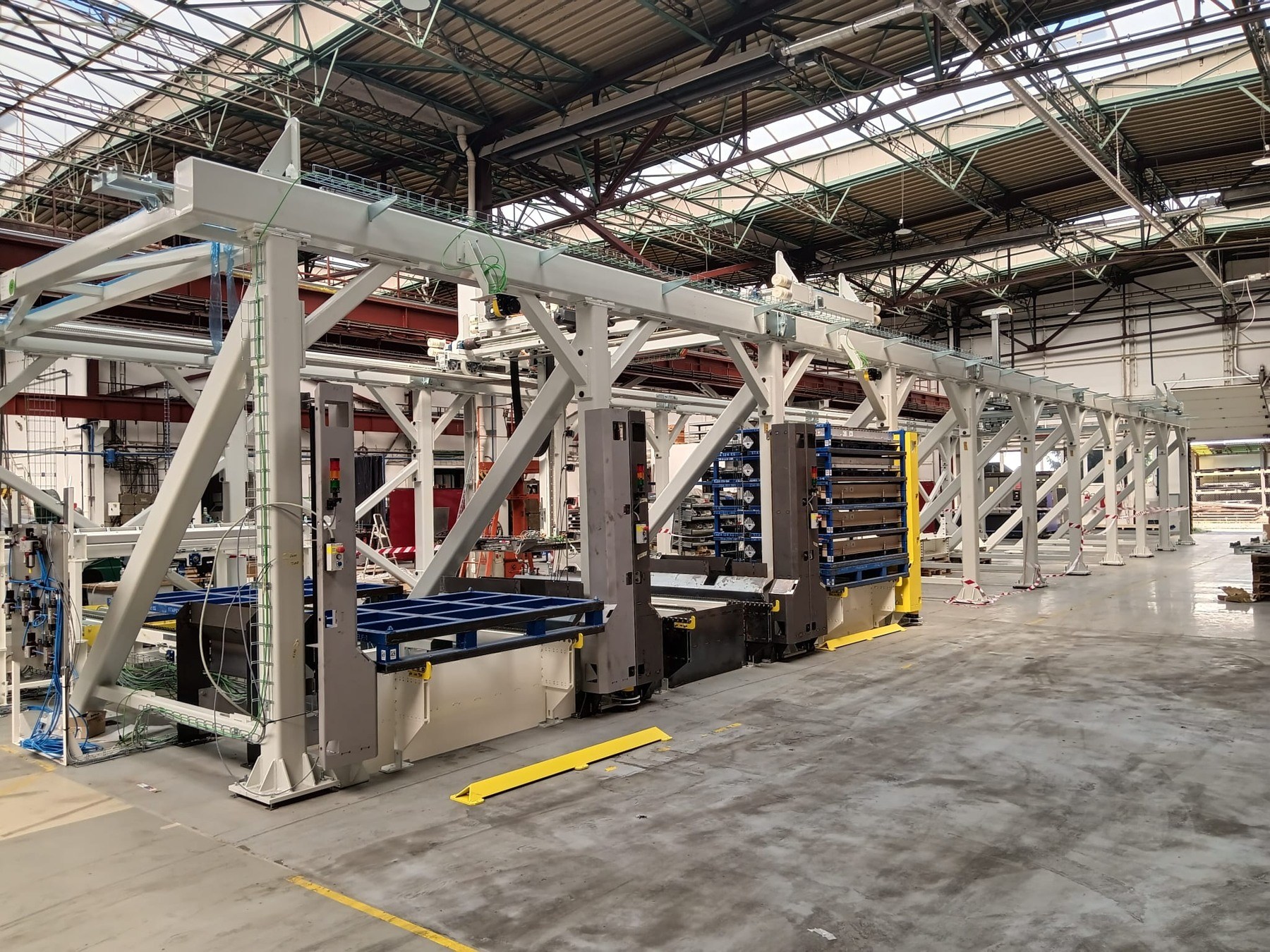
The steelwork project addressed the routing of conveyor equipment for car-body transfer within an existing production and logistics space. It included load-bearing members, access areas and structural interfaces with the building. The handed-over scope covered by this reference consists of the steel structure and engineering.
Scope of work
- Structural design and analysis of the load-bearing parts
- A suspended section, a framed section and interconnected truss members
- Conveyor supports, access gratings, protective mesh and bracing
- Interface measurements, geometry checks and partial handover in December 2024
Execution
The project required coordination between structural designers, analysts, fabrication, erection and surveying. Key tasks were positioning the new steelwork within the existing building and aligning its interfaces with adjacent conveyor equipment.
Three structural sections within an existing building
The structural documentation addresses a conveyor route approximately 100 m long and typically around 5.5 m wide. The layout is divided into three sections with different load-transfer arrangements. Their configuration accommodates the existing building structure, adjacent conveyors and the required access areas.
Section A is suspended from an existing support grid prepared for the equipment. Section B is a T-shaped frame structure, with a bolted truss spanning its widened part. Section C uses interconnected truss frames with longitudinal members supporting the conveyor equipment.
- Section A: bolted clamps, girders, suspension ties, crossbeams and longitudinal members.
- Section B: a main part measuring 38 × 5.5 m, a 4.1 × 6.2 m extension and a design height of 9 m.
- The widened part of section B has a truss designed for an 11.5 m span and a structural depth of 1.18 m.
- Section C: a 16 × 14 m footprint and a design height of 9 m.
Structural analysis, access and installation interfaces
The load-bearing arrangement combines conveyor supports with operator access areas. Secondary beams carry equipment, protective mesh and access gratings; the structural design distinguishes equipment loads from access-area loads. Bracing and connections to the existing reinforced-concrete columns provide spatial stability.
The design assesses the load-bearing members and their deflections, including the effects of conveyor equipment and installation stages. Coordination included measurements of the existing structures and the elevation interfaces between the new steelwork and the installed conveyors.
- The structural documentation specifies S355J2 and S235JR steels, bolted connections and anchoring components.
- The design specifies a protective paint system for corrosivity category C3.
- The project links structural analysis, steelwork fabrication and erection, conveyor interfaces, and access for operation and maintenance.
Structural handover and inspection scope
The steel structure and engineering were handed over as a separately defined part of the contract in December 2024. Checks covered geometry, structural interfaces, guardrails, access gratings and initial-inspection documentation. Handover of this part forms the basis of the stated financial band.
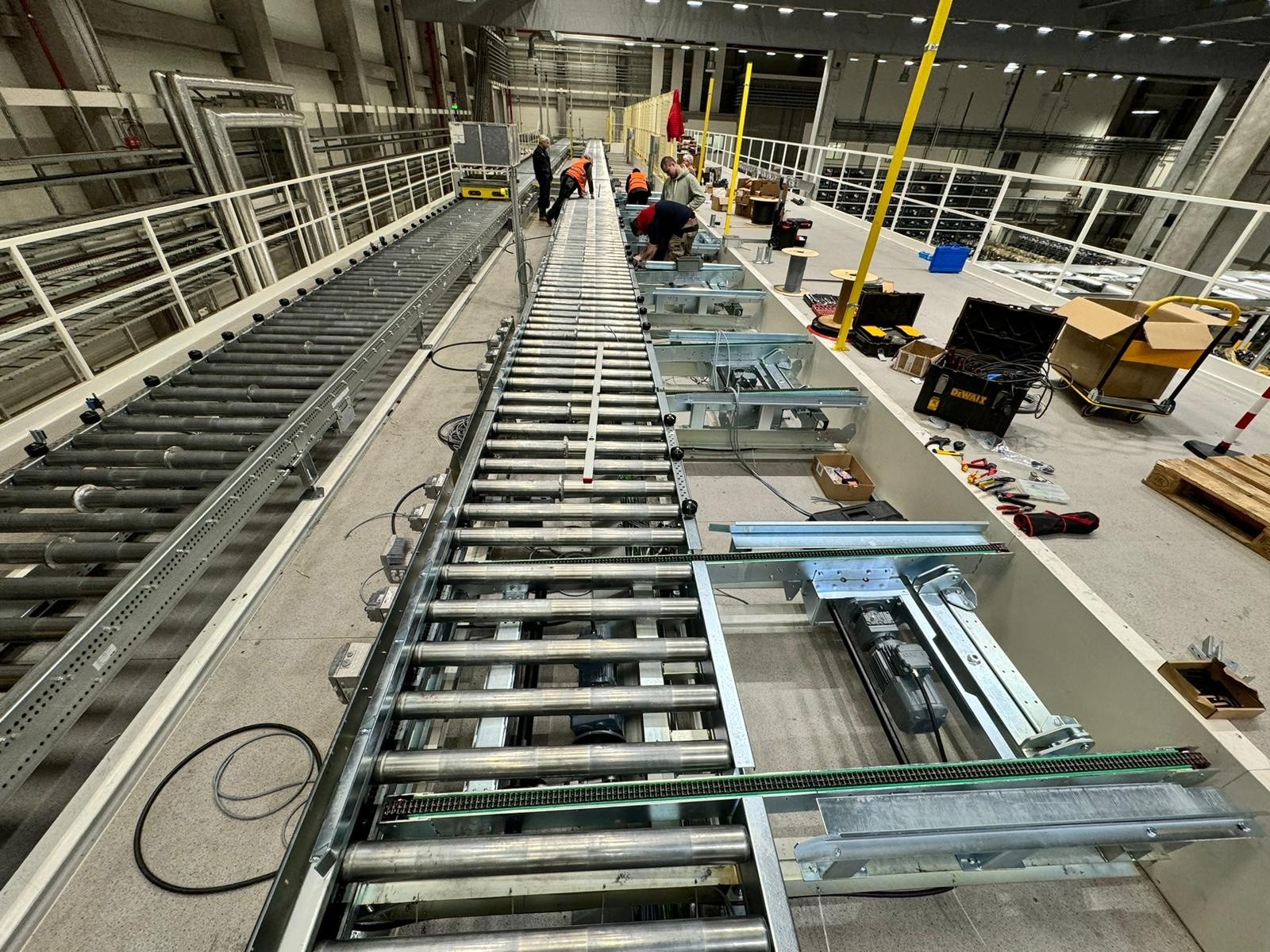
The associated conveyor elements, electrical installation and control system were addressed in further stages of the overall technology project. This reference therefore covers the support structure and related engineering. Operating and maintenance instructions addressed checks of connections, anchoring, geometry and corrosion protection.
- November 2024: measurements of the existing structures and elevation interfaces.
- December 2024: initial inspection, checks and partial handover of the structure and engineering.
- The handover protocol for this part is dated 17 December 2024.
Outcome
The load-bearing steelwork and related engineering were delivered and recorded in a partial handover protocol. The reference scope and financial band cover this part; the associated conveyors, electrical installation and controls belong to further stages of the technology project.