The project in context
Technology in its operating context.
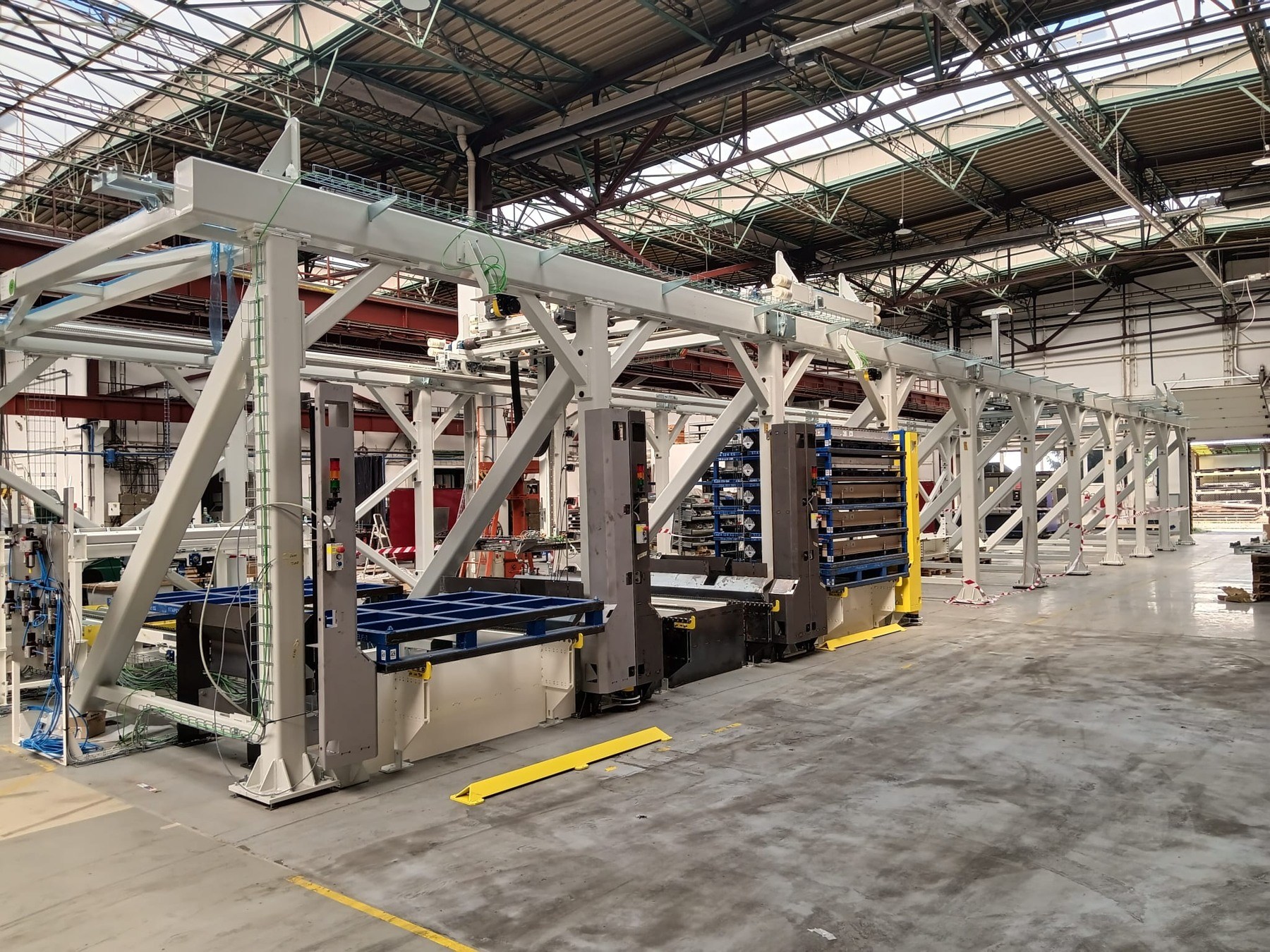
The project combined an extension of the existing conveyor technology with changes to PLC control, visualisation and supervisory material-flow control. The technical specification defines two new workstations, each with three transfer positions and three waiting positions. The changes accommodate the existing roller tracks, lifts, stackers and workstations.
Scope of work
- Transfer and parking stations for carriers with sequenced trolleys
- Cross transfers between roller tracks and associated mechanical modifications
- PLC, HMI, visualisation and supervisory control with carrier identification
- Electrical and functional testing, inspection and user acceptance testing
Execution
The work combined mechanical design, integration of purchased conveyor modules, electrical engineering and control-software changes. Installation of the cross-transfer tables and loading of the PLC software are recorded in a signed milestone handover from March 2024. Testing documentation and user verification of the control system followed.
Mechanical transfer between conveyors
A transfer station combines a lifting transverse chain conveyor with a through roller track. It moves a loaded carrier between the workstation and the main route and provides the corresponding path for empty trolleys returning to the workstation. A parking station holds a carrier until its destination transfer position becomes available.
The cross-transfer module connects two roller tracks. Its mechanism comprises two independently lifted roller conveyors and a transverse chain conveyor. The documented modules use self-supporting welded frames, sliding chain guides, geared drives and separate lifting and stop mechanisms.
- The module manuals specify a chain speed of 0.25 m/s at 50 Hz; this is not the overall line cycle time.
- Documented unit masses: 440 kg for a transfer/parking module and 596 kg for a chain transfer.
Trolley identification and sequence control
Carriers provide the transport platform for full and empty trolleys and are identified by barcode. The control solution links carrier identity to the production sequence, destination and requested departure time. It includes empty-trolley return, management of free carriers and routing through waiting positions.
The WMS user documentation describes conveyor occupancy and operating-mode displays, sequence settings, workstations and event reports. The web interface is complemented by WinCC visualisation and a mobile HMI for manual movements within the relevant control area. The solution also documents fallback scenarios for equipment and control-system outages.
Checks and the scope of handed-over stages
The documentation includes electrical test reports for both halls, covering protective-circuit measurements, insulation resistance and fault-loop impedance. A separate inspection of the extended conveyor system took place in May 2024. These records serve a different purpose from the commercial handover of a project milestone.
User testing in July 2024 covered 28 scenarios, including sequenced-trolley discharge, management of empty carriers, manual movements and behaviour during lift, workstation or visualisation outages. Acceptance of the control part was conditional on resolving open points before machinery acceptance. The financial range for this reference relates to the documented invoiced milestones.
Outcome
Handed-over mechanical and engineering stages of the conveyor, with conditional acceptance of the control system after user testing.