The project in context
Technology in its operating context.
The change in reactor size required a new support arrangement, spatial interface modifications and coordinated work within an existing chemical process area.
Scope of work
- Removal of the original vessel and installation of the new reactor in an existing process area
- Support plate, grating modifications and assembly of an agitator with two impellers
- PVDF, polypropylene, stainless-steel and carbon-steel piping
- On-site water test, operating tests of the piping and documentation handover
Execution
The replacement combined dismantling, lifting the new vessel to +6 m, agitator assembly, piping modifications and subsequent tests.
Installing a larger vessel within an existing space
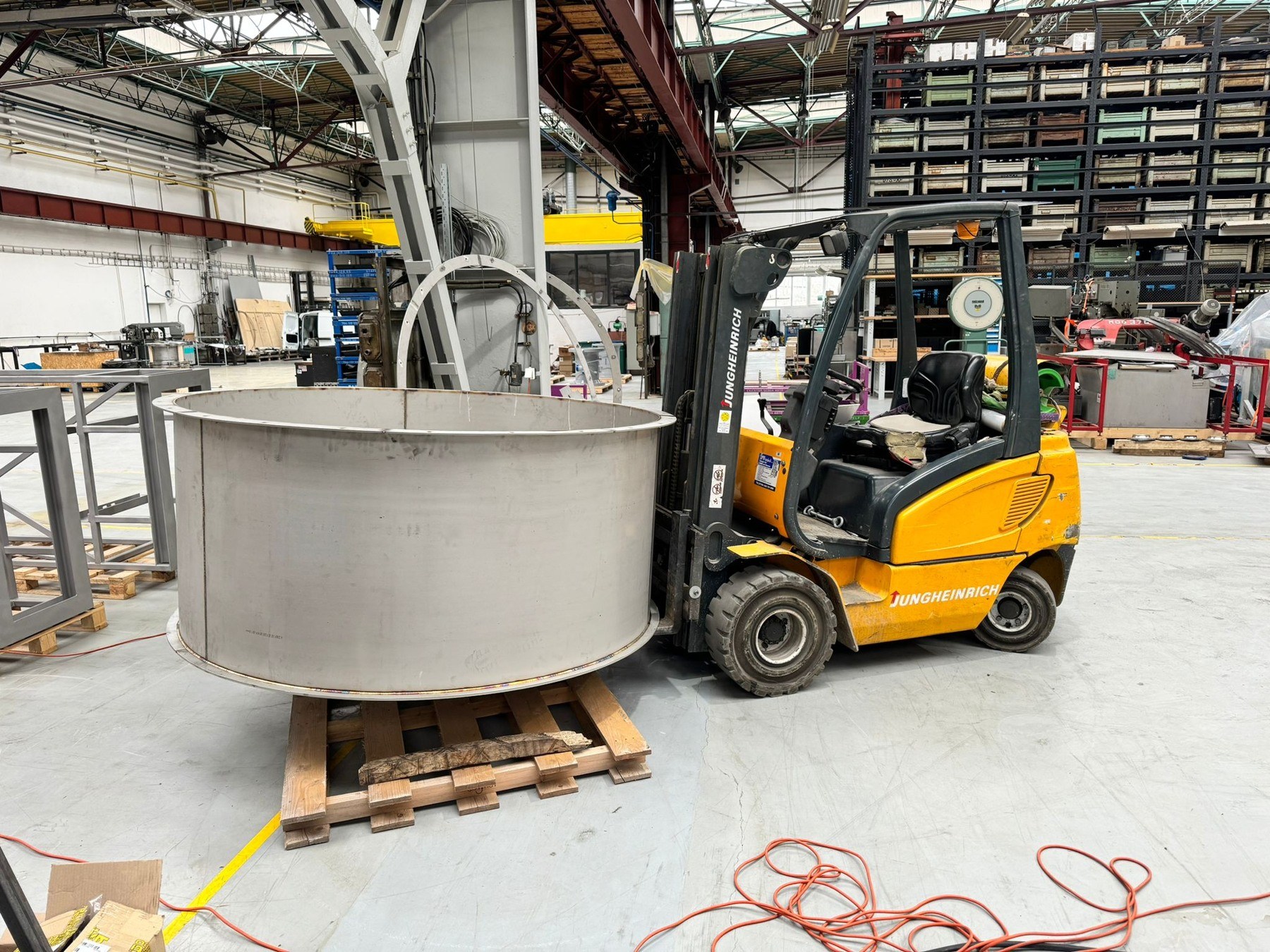
The new reactor had to be brought to the upper floor through the existing equipment platform. During preparation, part of the structure around the transport opening was temporarily dismantled, and the vessel was lifted using the installed hoist. Removal of the old equipment was followed by alignment and installation of the new reactor on modified supports.
A steel load-spreading plate was added. Bolts and M16 beam clamps connected it to the existing structure, and the access gratings were adapted to the new support arrangement. The work therefore covered structural analysis, plate fabrication, surface protection and installation coordination.
- Installed vessel: a volume of 3.9 m³ and a nominal diameter of 1,500 mm, as specified by the manufacturer.
- Composite vessel with a protective PVDF internal liner.
- Assembly of the new agitator: a shaft and two 500 mm impellers, including stabilising and locking components.
Pipe connections and coordination between disciplines
Changes in vessel size and nozzle orientation required modifications to 15 pipe runs in four material classes. The affected systems included PVDF, polypropylene, grade 1.4404 stainless steel and carbon steel. Work combined length adjustments, flanged connections, new gaskets and minor support modifications.
The inlet mixer was shortened by approximately 120 mm, and its bracket was also modified. The existing air-operated diaphragm pump was relocated and reconnected. Electrical work and instrumentation and control were provided by the operator in coordination with the mechanical work.
- Affected pipe runs ranging from DN 15 to DN 80.
- Plastic piping joined by socket fusion, with butt fusion used for diameters above 63 mm.
- Reinstatement of insulation on modified pipes, with 0.6 mm stainless-steel cladding.
- Coordination of work in a potentially explosive atmosphere, including work permits, gas monitoring and a fire watch.
Installation verification and handover
The installation log confirms an on-site leak test and water pressure test on 26 April 2024. The as-built documentation also describes operating tests of the connected piping. The acceptance procedure concluded on 23 May 2024, and the customer subsequently confirmed the work in a reference letter.
The handover documentation included vessel and agitator manufacturer information, structural analysis of the support arrangement, material records, installation records and as-built documentation. Before installation, the vessel itself underwent a manufacturer-stage water test at 1.3 bar gauge pressure for 60 minutes.
- Reference scope: engineering preparation and execution of the replacement, equipment installation and associated piping and structural work.
- The manufacturer-stage vessel test and on-site installation verification were separate stages.
Outcome
An installed reactor with completed structural and piping interfaces; the acceptance procedure concluded in May 2024.