
PROJECTEnquire ↗
← All technologies

Technology as a functional system

Process equipment and skid assemblies

Tanks, pumps, valves and instruments must work together. A complete specification enables an assembly to connect to the actual plant and its operating interfaces.

The whole application matters.

A process assembly may combine storage, dosing, mixing or measurement. Engineering starts with its duty and balances, develops the process diagram and defines mechanical, electrical and control interfaces. Fabrication details and supply boundaries are established for the project.

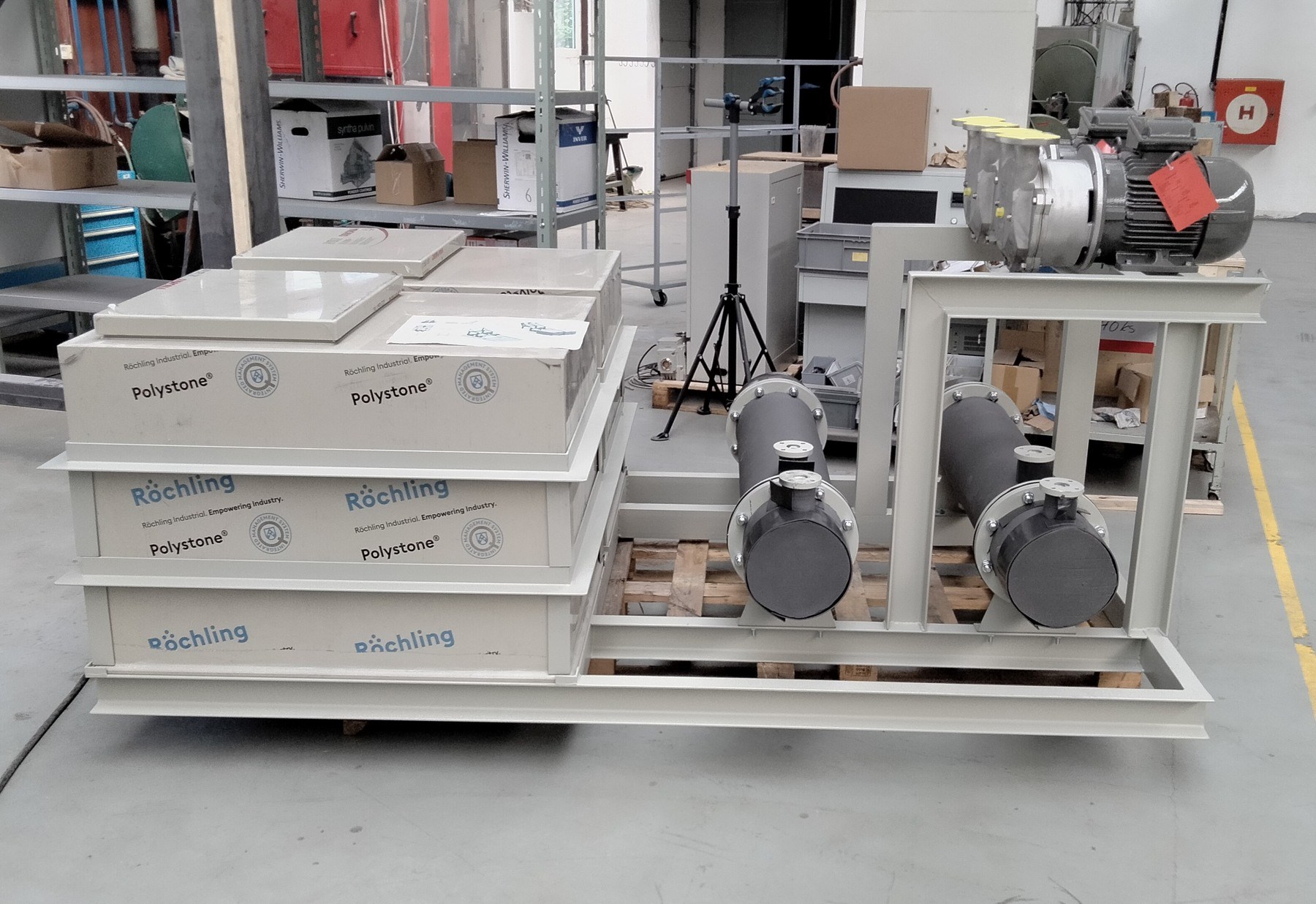
Vacuum system replacement — project photograph
Photograph from the project. · Vacuum system replacement

From operating need to design.

01

Tanks and operating inventory

Usable capacity, working levels, filling, draining and cleaning must be defined. An atmospheric tank is not automatically suitable for pressure or vacuum. Materials and construction must accommodate the complete operating cycle.
02

Dosing and metering assemblies

Pump, regulating element and measurement form a common chain. Start-up, minimum batch, pulsation or changing backpressure can affect the result even when individual components meet their catalogue specifications.

03

Layout for installation and service

The frame must account for space, handling, transport dimensions and access to replaceable parts. Utility and signal interfaces are coordinated before fabrication. A late nozzle change can affect several engineering disciplines.

04

Reactors and autoclaves

Batch-equipment preparation defines the operating cycle, agitation, heating or cooling, pressure conditions and opening arrangements. Mechanical design is coordinated with sequencing and conditions for operator access.

05

Gas pressure-regulating packages

A skid may combine filtration, pressure conditioning, measurement and isolation. Inlet and outlet conditions, operating variants, drainage and protective-function interfaces are defined from the process brief.

A scope you can specify.

Inputs that matter.

  • Duty, media and operating modes.
  • Balances, capacities, batches and accuracy.
  • Pressure, temperature and material requirements.
  • Space, transport and connection points.
  • Controls, utilities and acceptance requirements.
  • Operating cycle, fluid composition, reaction or heat balance and cleaning requirements.
  • Opening, operator-access, interlock and functional-test requirements.
Prepare your brief →

Outputs and acceptance.

  • Assembly diagram and specification.
  • Interface drawing and equipment list.
  • Verification and supply-documentation plan.
  • Equipment specification, utility interfaces and operating-cycle description.

The actual scope and acceptance criteria depend on the application and contract.

Pipe and tank materials: an initial comparison

Assess the complete fluid composition including impurities, concentration, temperature and loading; a material family designation alone does not establish product suitability.

On a small screen, scroll the table sideways to compare the selection criteria.

Pipe and tank materials: an initial comparison
Principle or optionTypical applicationWhat to verify when selecting
Carbon steelPiping and welded vessels where mechanical design and corrosion assessment support its use.Specific grade, toughness at design temperature, weldability, and corrosion protection or allowance.[1]
Austenitic stainless steel, e.g. 304LProcess piping and tanks requiring cleanability and resistance in an assessed environment.Chlorides and other impurities, cleaning chemicals, surface finish, crevices and weld-area condition.[3][2]
Austenitic stainless steel, e.g. 316LAn option considered for greater corrosion demands than standard chromium-nickel grades.The corrosion mechanism, temperature, concentration and cleaning regime; this grade is not universally chloride-resistant.[3][2]
Duplex stainless steelEquipment where corrosion resistance and mechanical strength are considered together.Specific duplex grade, service environment, welding procedure and thermal effects; properties vary across the family.[2]
Polypropylene, PP-HChemical piping and water treatment where the fluid and service conditions are suitable.Chemical resistance, allowable pressure versus temperature and service duration, expansion, supports and jointing method.[4]
Polyvinylidene fluoride, PVDFSelected chemical and clean-process piping with specific system material requirements.Resistance to the actual mixture, pressure and temperature, process cleanliness requirements, and joint and seal compatibility.[4]
Sources for this comparison
  1. SSAB – Pressure vessel steels ↗
  2. Outokumpu – Duplex grades and comparison with austenitic grades ↗
  3. Outokumpu – Corrosion tables and limits of their application ↗
  4. GF Piping Systems – Technical handbook for PP and PVDF pressure piping ↗

Reviewed on 18 October 2026. Selection is confirmed for the specific operating conditions and equipment design.

Which verification and document to request

Acceptance testing, calibration, statutory inspection and conformity assessment serve different purposes, so agree their scope and expected documents before supply.

On a small screen, scroll the table sideways to compare the selection criteria.

Which verification and document to request
Principle or optionTypical applicationWhat to agree and which output to expect
FAT: factory acceptance testVerification of agreed functions and requirements before shipment, for example for a control system or assembly.Approved procedure, criteria and simulated interfaces; the output records results, deviations and open items within the tested scope.[1]
SAT: site acceptance testVerification after installation, considering actual connections and agreed operating conditions.Site and utility readiness, interfaces and criteria; the output is a site test record and a list of outstanding actions.[1]
CalibrationEstablishing the relationship between instrument indication and reference values under specified conditions.Measurement points, traceability and uncertainty; the output reports calibration results, not adjustment or an automatic pass/fail decision.[2]
Statutory inspection, e.g. electrical equipment in CzechiaAssessment of equipment safety within the scope of applicable requirements.Equipment type and extent, documentation and inspector qualification; the output is an inspection report with findings and a conclusion on the inspected condition.[3]
Product conformity assessmentDemonstrating compliance with applicable legal requirements before placing a product on the market or putting it into service.Applicable legislation and procedure; the manufacturer prepares technical documentation and the relevant declaration, with notified-body involvement where the required procedure calls for it.[4]
Sources for this comparison
  1. IEC 62381:2024 – Factory, site and integration acceptance tests ↗
  2. BIPM / JCGM VIM – Calibration, clause 2.39 ↗
  3. e-Sbírka – Nařízení vlády č. 190/2022 Sb., aktuální znění ↗
  4. European Commission – Manufacturers and conformity assessment ↗

Reviewed on 18 October 2026. Selection is confirmed for the specific operating conditions and equipment design.

From the project portfolio.

All projects ↗
Project photograph.

Project 674 · Process plant upgrades

Vacuum system replacement

Location: Rybitví, Czechia · 2024

New vacuum assembly with PP tanks, heat exchangers, piping, instrumentation and controls.

Broader project portfolioProcess equipment refurbishment and installation

2 independent vacuum trainsDetails →
Project photograph.

Project 692 · Process plant upgrades

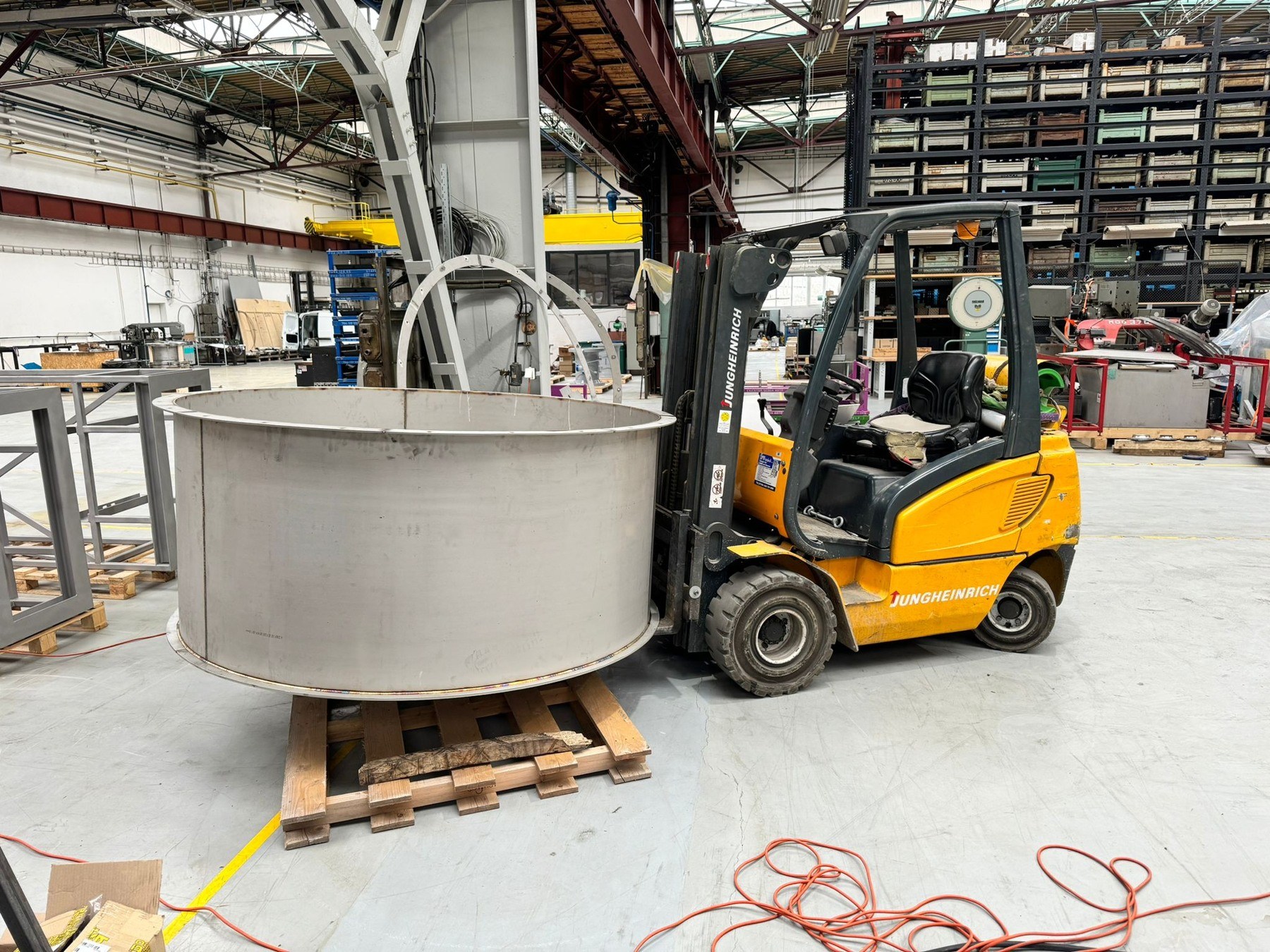
Stainless steel tank with agitator

Installation location: Přerov, Czechia · 2024

A grade 1.4571 tank with an internal diameter of 1,950 mm, supplied in two sections and welded together during installation.

Broader project portfolioFabrication, installation and supply of a tank with agitator

1 tank with an agitatorDetails →
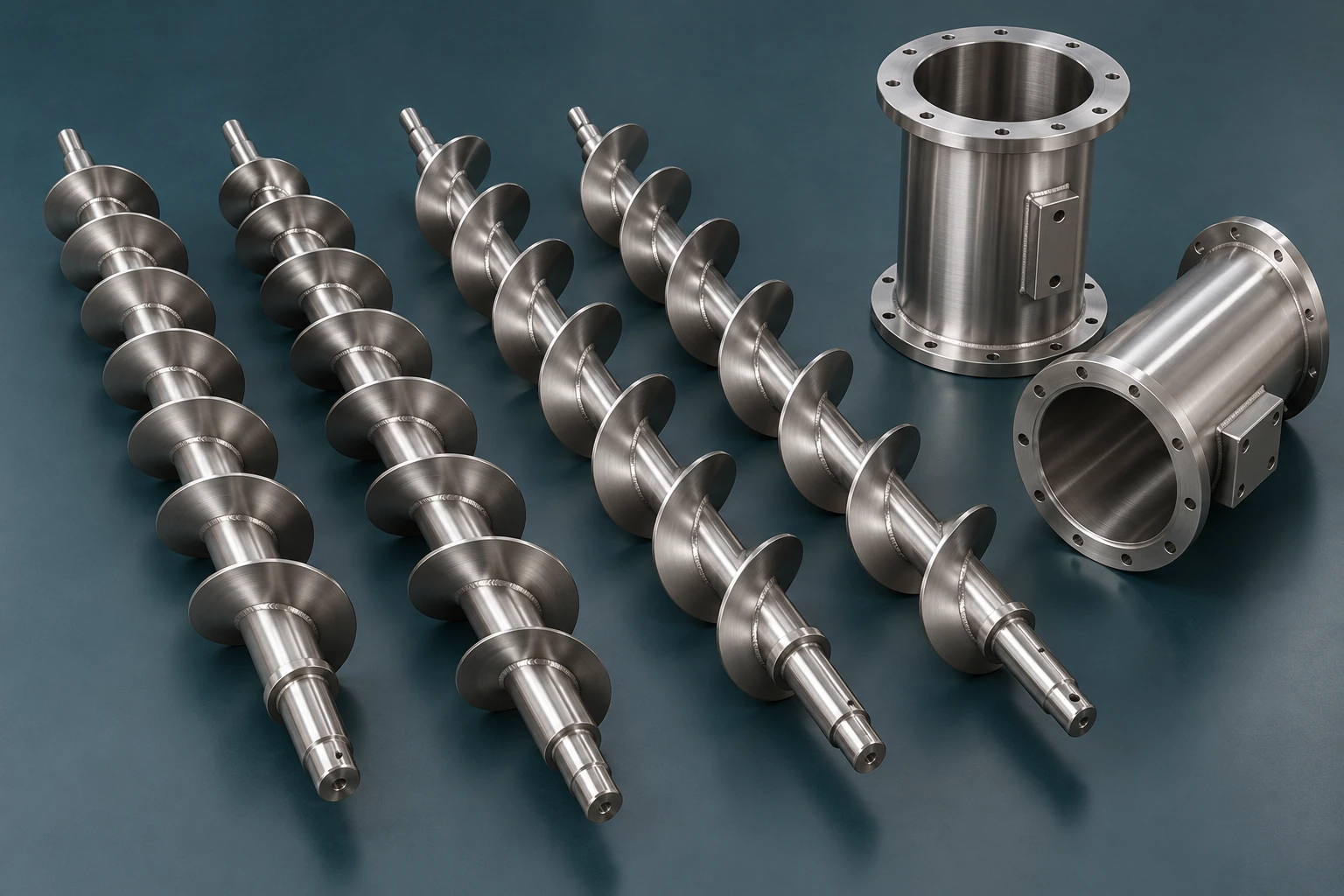
AI illustration.

Project 1156 · Custom manufacturing

Dosing screws and feeder housings

Project location: Pardubice, Czechia · August 2026

Four dosing screws and two twin-screw conveyor housings in grade 1.4541 stainless steel.

EMKO PROJECTCustom manufacture and supply

4 dosing screwsDetails →

Expertise for this application.

Connect the whole solution.

Questions that shape the project.

Is a skid always the better arrangement?

It depends on space, transport and the extent of preassembly. Some projects benefit from a split package or final assembly at the installation site.

Can the assembly use existing controls?

Yes, when signals, communication, operating sequences and responsibilities for changes are agreed. Compatibility is verified during engineering.

A clear brief.
A practical next step.

Send your drawings, operating parameters or a short description of the change you need. We will review the technical interfaces and propose the next steps towards a quotation, clarifying any missing information with you.

Discuss your requirements ↗Prepare a technical brief →+420 731 771 147info@emkoproject.cz